JWT Authentication and Token Flow
1. Overview
The Event Management system uses a hash-based JWT authentication architecture where the Registration Portal (gateway) mediates between customer websites and the Admin Service. This authentication method is designed for websites without OAuth2/OIDC capability (e.g., WordPress sites).
|
For organizations with external Identity Providers (IdP) supporting OAuth2/OIDC, see OAuth2/OIDC Authentication as an alternative authentication method. |
Key Components:
-
Customer Website/Portal - External system providing userKey and userHash (e.g., WordPress with custom plugin)
-
Registration Portal - JHipster gateway with Angular frontend
-
Admin Service - Backend API that issues and validates JWT tokens
Security Approach:
-
Server-Side Token Storage - JWT never exposed to Angular
-
Session-Based Authentication - Standard HTTP session management
-
Hash-Based Credentials - Customer website sends userKey + hash instead of password
-
API Key Authentication - Gateway authenticates to Admin Service
-
Stateless Backend - Admin Service validates JWT without session state
1.1. Authentication Methods Comparison
| Method | Use Case | Documentation |
|---|---|---|
Hash-Based JWT (this page) |
Websites without OAuth2/OIDC capability |
WordPress sites with custom plugin, legacy CMS platforms |
OAuth2/OIDC |
Organizations with external IdP/SSO |
OAuth2/OIDC Authentication (work in progress) |
1.2. JWT Authentication Flow
The system uses a JWT-based security architecture with session-backed token storage, involving three primary components:
-
Customer Website/Portal - Holds userKey and userHash credentials
-
Registration Portal - Angular frontend + Spring Boot gateway (JHipster)
-
Admin Service - JWT issuer and validator (backend)
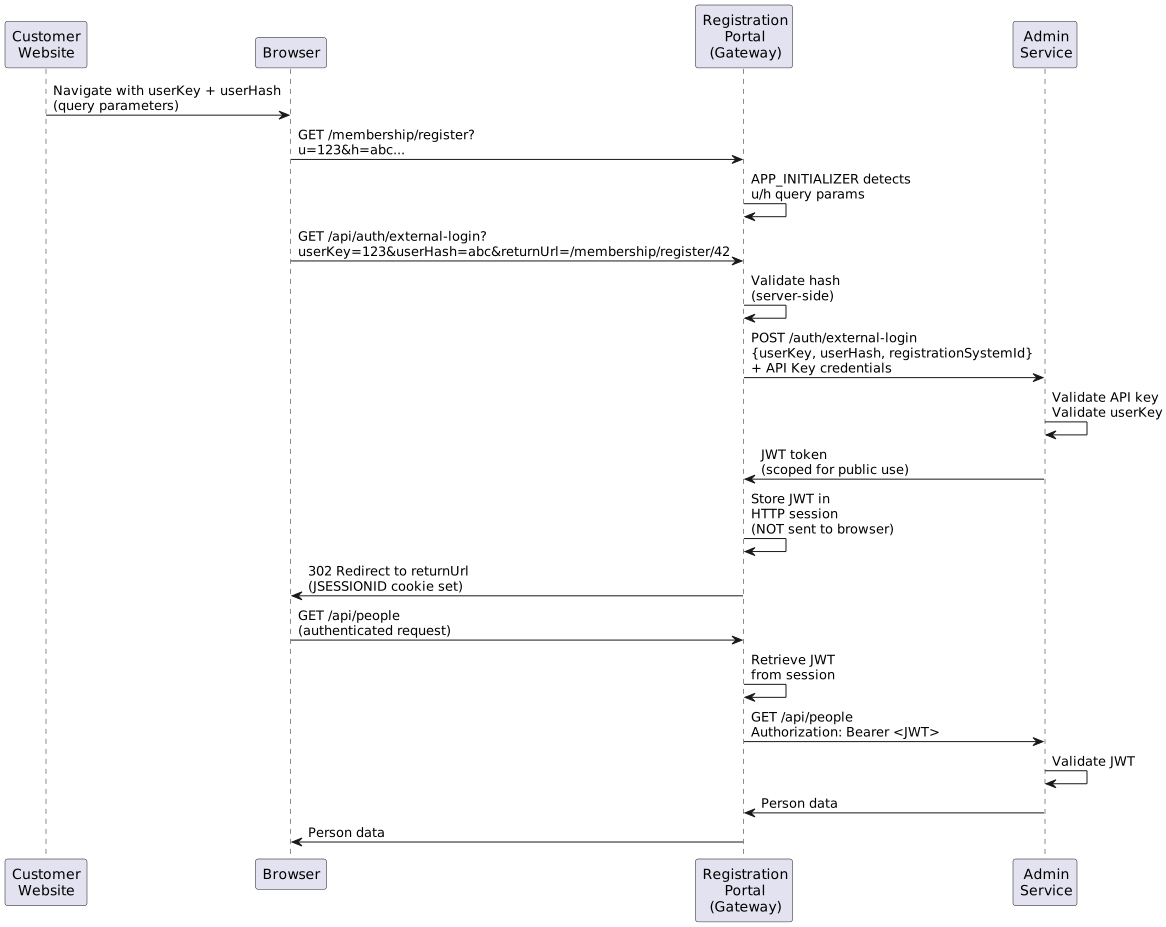
1.2.2. Authentication Steps
Step 1: Initial Navigation with Credentials
The customer website directs users to the Registration Portal with credentials via standard browser navigation:
https://registration.example.com/membership/register/42?u=123&h=5d41402abc4b2a76b9719d911017c592
Parameters:
-
u(oruserKey) - External user key from customer system (maps toOrgUser.externalUserId) -
h(oruserHash) - Hash of userKey + secret for tamper-proof validation
userId, userKey, and u all refer to the same value: OrgUser.externalUserId. The canonical name is userKey; u is the URL shorthand.
|
Step 2: Redirect-Based Authentication
The Angular AuthBootstrapService (APP_INITIALIZER) detects u/h query params, persists the userKey to localStorage, and redirects to the gateway’s GET endpoint:
GET /api/auth/external-login?userKey=123&userHash=5d41402abc4b2a76b9719d911017c592&returnUrl=/membership/register/42
Gateway Processing (GET /api/auth/external-login):
-
Resolves
registrationSystemIdfrom TenantContext -
Exchanges credentials with Admin Service using gateway’s own API key
-
Receives JWT token from Admin Service
-
Stores JWT in HTTP session via
SessionAuthenticationService.establishSession() -
Redirects browser back to
returnUrl
@GetMapping("/api/auth/external-login")
public void externalLoginRedirect(
    @RequestParam String userKey,
    @RequestParam String userHash,
    @RequestParam(defaultValue = "/") String returnUrl,
    HttpServletRequest httpRequest,
    HttpServletResponse httpResponse) throws IOException {

    Long registrationSystemId = TenantContext.getCurrentRegistrationSystemId();
    String jwt = authClient.exchangeForJwt(registrationSystemId, userKey, userHash);

    sessionAuthenticationService.establishSession(jwt, httpRequest, httpResponse);
    httpResponse.sendRedirect(returnUrl);
}
Admin Service Token Exchange:
POST /auth/external-login
X-API-KEY: <gateway-api-key>
Content-Type: application/json

{
  "userKey": "123",
  "registrationSystemId": 1,
  "userHash": "5d41402abc4b2a76b9719d911017c592"
}

Response:
{
  "token": "eyJhbGciOiJIUzI1NiIsInR5cCI6IkpXVCJ9..."
}
JWT Token Structure:
{
  "sub": "user123",
  "iss": "event-admin-service",
  "aud": "registration-portal",
  "exp": 1706789123,
  "iat": 1706785523,
  "accountId": 42,
  "personId": 100,
  "orgId": 8,
  "authorities": ["ROLE_USER"]
}
Step 3: Session-Based JWT Storage
Key Security Principle: The JWT token is never exposed to the Angular frontend.
-
Gateway stores JWT in
HttpSession(server-side) -
Requires either:
-
Redis-backed Spring Session (for distributed deployments)
-
Sticky load balancing (for session affinity)
-
-
API responses contain no token information
Session Configuration:
spring:
  session:
    store-type: redis
    redis:
      namespace: registration-portal:session
    timeout: 30m
Step 4: Gateway Filter JWT Injection
A custom filter intercepts requests to admin-service routes and injects the JWT:
@Component
public class JwtSessionFilter extends OncePerRequestFilter {

    @Override
    protected void doFilterInternal(HttpServletRequest request,
                                   HttpServletResponse response,
                                   FilterChain filterChain) {
        HttpSession session = request.getSession(false);

        if (session != null) {
            String jwt = (String) session.getAttribute("JWT_TOKEN");

            if (jwt != null && isAdminServiceRoute(request)) {
                // Inject JWT as Authorization header for proxied requests
                request.setAttribute("PROXIED_JWT", jwt);
            }
        }

        filterChain.doFilter(request, response);
    }

    private boolean isAdminServiceRoute(HttpServletRequest request) {
        String path = request.getRequestURI();
        return path.startsWith("/api/") || path.startsWith("/services/");
    }
}
Spring Cloud Gateway Filter:
@Component
public class JwtGatewayFilter implements GlobalFilter, Ordered {

    @Override
    public Mono<Void> filter(ServerWebExchange exchange, GatewayFilterChain chain) {
        return exchange.getSession()
            .flatMap(session -> {
                String jwt = session.getAttribute("JWT_TOKEN");

                if (jwt != null) {
                    // Add Authorization header to proxied request
                    ServerHttpRequest modifiedRequest = exchange.getRequest()
                        .mutate()
                        .header("Authorization", "Bearer " + jwt)
                        .build();

                    return chain.filter(exchange.mutate()
                        .request(modifiedRequest)
                        .build());
                }

                return chain.filter(exchange);
            });
    }

    @Override
    public int getOrder() {
        return -100; // High priority, before routing
    }
}
Step 5: Admin Service JWT Validation
Admin Service validates the JWT bearer token for all authenticated requests:
@Configuration
@EnableWebSecurity
public class SecurityConfiguration {

    @Bean
    public SecurityFilterChain filterChain(HttpSecurity http) throws Exception {
        http
            .oauth2ResourceServer(oauth2 -> oauth2
                .jwt(jwt -> jwt
                    .jwtAuthenticationConverter(jwtAuthenticationConverter())
                )
            )
            .authorizeHttpRequests(authz -> authz
                .requestMatchers("/api/auth/exchange").hasAuthority("SCOPE_api-key")
                .requestMatchers("/api/**").authenticated()
                .anyRequest().permitAll()
            );

        return http.build();
    }
}
1.2.3. Security Advantages
No Client-Side Token Exposure:
-
JWT never sent to Angular application
-
Prevents XSS attacks from stealing tokens
-
Reduces attack surface for token theft
Server-Side Validation:
-
Hash validation occurs server-side using secrets from application.properties
-
Client cannot bypass validation
-
Customer website secrets never exposed to browser
Proper Trust Boundaries:
-
Gateway acts as security boundary
-
Admin Service remains stateless (validates JWT only)
-
Clear separation of concerns
Session Management:
-
Standard HTTP session security
-
CSRF protection via session cookies
-
Familiar security patterns for web applications
1.2.4. Configuration Requirements
Gateway (Registration Portal):
# application.yml
security:
  external-auth:
    secret-key: ${EXTERNAL_AUTH_SECRET}  # For userHash validation

  admin-service:
    api-key: ${ADMIN_SERVICE_API_KEY}    # For token exchange
    base-url: http://localhost:8080

spring:
  session:
    store-type: redis
    timeout: 30m
Admin Service:
# application.yml
spring:
  security:
    oauth2:
      resourceserver:
        jwt:
          issuer-uri: http://localhost:8080
          jwk-set-uri: http://localhost:8080/.well-known/jwks.json

security:
  api-keys:
    registration-portal: ${REGISTRATION_PORTAL_API_KEY}
1.2.5. Session and Token Lifecycle
Session Creation:
-
User navigates from customer website
-
Gateway creates HTTP session
-
Validates userKey/userHash
-
Exchanges for JWT and stores in session
Session Active:
-
All API requests include session cookie
-
Gateway retrieves JWT from session
-
JWT injected into proxied requests
-
Admin Service validates JWT
Session Expiry:
-
After 30 minutes of inactivity (configurable)
-
User must re-authenticate via customer website
-
JWT becomes invalid after expiration time
Token Refresh:
-
Gateway can refresh JWT before expiration
-
Transparent to Angular application
-
Maintains user session continuity
1.2.6. Error Scenarios
Invalid UserHash:
GET /api/auth/external-login?userKey=123&userHash=invalid_hash&returnUrl=/membership/register/42

Response: 401 Unauthorized
{
  "error": "Invalid credentials",
  "message": "Hash validation failed"
}
Expired JWT:
GET /api/people
Session contains expired JWT

Gateway Response: 401 Unauthorized
{
  "error": "Token expired",
  "message": "Please re-authenticate"
}
Missing Session:
GET /api/people
No session or JWT in session

Gateway Response: 401 Unauthorized
{
  "error": "Not authenticated",
  "message": "Session not found or expired"
}
1.2.7. Deployment Considerations
Load Balancing:
-
Option 1: Redis-backed Spring Session (recommended)
-
Sessions shared across gateway instances
-
No sticky sessions required
-
Horizontal scaling support
-
-
Option 2: Sticky Sessions
-
Session affinity at load balancer
-
Simpler configuration
-
Limited scaling (session loss on instance failure)
-
High Availability:
-
Redis cluster for session store
-
Multiple gateway instances
-
JWT validation stateless at Admin Service
Security Hardening:
-
HTTPS only in production
-
Secure session cookies (
httpOnly,secure,sameSite) -
Short JWT expiration times (15-30 minutes)
-
Regular token refresh
-
API key rotation strategy
2. Integration with Multi-Dimensional Security
The JWT authentication system works in conjunction with the Multi-Dimensional Security System:
Authentication vs. Authorization:
-
Authentication (JWT) - Proves user identity
-
Authorization (Multi-Dimensional) - Controls data access based on organization and person relationships
Security Flow:
-
JWT Validation - Admin Service verifies token signature and expiration
-
User Context - Extracts userKey/personId from JWT claims
-
Organization Resolution - Determines user’s organization memberships via OrgUser entity
-
Person Resolution - Identifies linked persons via LinkedPerson entity
-
Access Control - Applies organizational and personal security
Example Flow:
// 1. JWT Filter validates token
@Component
public class JwtAuthenticationFilter extends OncePerRequestFilter {
    @Override
    protected void doFilterInternal(HttpServletRequest request, ...) {
        String jwt = extractJwt(request);
        if (jwtValidator.validate(jwt)) {
            // Extract user context from JWT
            Authentication auth = jwtConverter.convert(jwt);
            SecurityContextHolder.getContext().setAuthentication(auth);
        }
    }
}

// 2. Security Service applies multi-dimensional rules
@Service
public class SecurityService {
    public Specification<Event> hasOrgAccess(AccessLevel level) {
        // Get current user from JWT authentication
        String userKey = getCurrentUserKey();

        // Query OrgUser to get organization memberships
        List<Long> orgIds = orgUserRepository
            .findByUserKey(userKey)
            .stream()
            .map(ou -> ou.getOrganisation().getId())
            .collect(Collectors.toList());

        // Build specification for org access
        return (root, query, cb) ->
            root.get("organisation").get("id").in(orgIds);
    }
}
3. Gateway Implementation
3.1. External Login Endpoint
@RestController
@RequestMapping("/api/auth")
public class ExternalAuthController {

    private final AdminServiceClient adminServiceClient;
    private final HashValidationService hashService;

    @PostMapping("/external-login")
    public ResponseEntity<Void> externalLogin(
            @RequestBody ExternalLoginRequest request,
            HttpSession session) {

        // Validate hash server-side
        if (!hashService.validate(request.getUserKey(), request.getUserHash())) {
            throw new UnauthorizedException("Invalid credentials");
        }

        // Exchange credentials with Admin Service
        TokenResponse tokenResponse = adminServiceClient.exchangeCredentials(
            ExchangeRequest.builder()
                .userKey(request.getUserKey())
                .build()
        );

        // Store JWT in HTTP session (NOT sent to client)
        session.setAttribute("JWT_TOKEN", tokenResponse.getToken());
        session.setAttribute("JWT_EXPIRES_AT", tokenResponse.getExpiresAt());

        return ResponseEntity.ok().build();
    }

    @PostMapping("/refresh")
    public ResponseEntity<Void> refreshToken(HttpSession session) {
        String currentJwt = (String) session.getAttribute("JWT_TOKEN");

        if (currentJwt == null) {
            throw new UnauthorizedException("No active session");
        }

        // Request new token from Admin Service
        TokenResponse newToken = adminServiceClient.refreshToken(currentJwt);

        // Update session with new token
        session.setAttribute("JWT_TOKEN", newToken.getToken());
        session.setAttribute("JWT_EXPIRES_AT", newToken.getExpiresAt());

        return ResponseEntity.ok().build();
    }

    @PostMapping("/logout")
    public ResponseEntity<Void> logout(HttpSession session) {
        session.invalidate();
        return ResponseEntity.ok().build();
    }
}
3.2. Admin Service Client
@Service
public class AdminServiceClient {

    private final WebClient webClient;
    private final String apiKey;

    public AdminServiceClient(WebClient.Builder builder,
                             @Value("${security.admin-service.api-key}") String apiKey,
                             @Value("${security.admin-service.base-url}") String baseUrl) {
        this.webClient = builder.baseUrl(baseUrl).build();
        this.apiKey = apiKey;
    }

    public TokenResponse exchangeCredentials(ExchangeRequest request) {
        return webClient.post()
            .uri("/api/auth/exchange")
            .header("Authorization", "ApiKey " + apiKey)
            .bodyValue(request)
            .retrieve()
            .onStatus(HttpStatusCode::is4xxClientError,
                response -> Mono.error(new UnauthorizedException("Invalid credentials")))
            .bodyToMono(TokenResponse.class)
            .block();
    }

    public TokenResponse refreshToken(String currentToken) {
        return webClient.post()
            .uri("/api/auth/refresh")
            .header("Authorization", "Bearer " + currentToken)
            .retrieve()
            .bodyToMono(TokenResponse.class)
            .block();
    }
}
3.3. Gateway Filter Configuration
@Configuration
public class GatewayFilterConfig {

    @Bean
    public GlobalFilter jwtInjectionFilter() {
        return new JwtGatewayFilter();
    }
}

@Component
@Order(-100) // High priority
public class JwtGatewayFilter implements GlobalFilter {

    @Override
    public Mono<Void> filter(ServerWebExchange exchange, GatewayFilterChain chain) {
        String path = exchange.getRequest().getPath().value();

        // Only inject JWT for admin-service routes
        if (!path.startsWith("/api/") && !path.startsWith("/services/")) {
            return chain.filter(exchange);
        }

        return exchange.getSession()
            .flatMap(session -> {
                String jwt = session.getAttribute("JWT_TOKEN");

                if (jwt != null) {
                    ServerHttpRequest modifiedRequest = exchange.getRequest()
                        .mutate()
                        .header("Authorization", "Bearer " + jwt)
                        .build();

                    return chain.filter(
                        exchange.mutate().request(modifiedRequest).build()
                    );
                }

                return chain.filter(exchange);
            });
    }
}
4. Admin Service Implementation
4.1. Token Exchange Endpoint
@RestController
@RequestMapping("/api/auth")
public class AuthController {

    private final JwtTokenProvider tokenProvider;
    private final ApiKeyValidator apiKeyValidator;
    private final UserService userService;

    @PostMapping("/exchange")
    public ResponseEntity<TokenResponse> exchangeCredentials(
            @RequestHeader("Authorization") String apiKeyHeader,
            @RequestBody ExchangeRequest request) {

        // Validate API key from gateway
        if (!apiKeyValidator.validate(apiKeyHeader)) {
            throw new UnauthorizedException("Invalid API key");
        }

        // Verify user exists
        User user = userService.findByUserKey(request.getUserKey())
            .orElseThrow(() -> new NotFoundException("User not found"));

        // Generate JWT with user claims
        String jwt = tokenProvider.createToken(
            JwtClaims.builder()
                .subject(user.getId().toString())
                .userKey(user.getUserKey())
                .scope("public")
                .authorities(user.getAuthorities())
                .build()
        );

        return ResponseEntity.ok(
            TokenResponse.builder()
                .token(jwt)
                .expiresIn(tokenProvider.getTokenValidity())
                .expiresAt(Instant.now().plusSeconds(tokenProvider.getTokenValidity()))
                .build()
        );
    }

    @PostMapping("/refresh")
    public ResponseEntity<TokenResponse> refreshToken(
            @AuthenticationPrincipal Jwt jwt) {

        // Extract user from current JWT
        String userKey = jwt.getClaimAsString("userKey");

        User user = userService.findByUserKey(userKey)
            .orElseThrow(() -> new NotFoundException("User not found"));

        // Issue new JWT
        String newJwt = tokenProvider.createToken(
            JwtClaims.builder()
                .subject(user.getId().toString())
                .userKey(user.getUserKey())
                .scope("public")
                .authorities(user.getAuthorities())
                .build()
        );

        return ResponseEntity.ok(
            TokenResponse.builder()
                .token(newJwt)
                .expiresIn(tokenProvider.getTokenValidity())
                .expiresAt(Instant.now().plusSeconds(tokenProvider.getTokenValidity()))
                .build()
        );
    }
}
4.2. JWT Token Provider
@Service
public class JwtTokenProvider {

    private final Key signingKey;
    private final long tokenValidityInSeconds;

    public JwtTokenProvider(
            @Value("${security.jwt.secret}") String secret,
            @Value("${security.jwt.token-validity-seconds:1800}") long validity) {
        this.signingKey = Keys.hmacShaKeyFor(secret.getBytes());
        this.tokenValidityInSeconds = validity;
    }

    public String createToken(JwtClaims claims) {
        Instant now = Instant.now();
        Instant expiration = now.plusSeconds(tokenValidityInSeconds);

        return Jwts.builder()
            .setSubject(claims.getSubject())
            .claim("userKey", claims.getUserKey())
            .claim("scope", claims.getScope())
            .claim("authorities", claims.getAuthorities())
            .setIssuer("event-admin-service")
            .setAudience("registration-portal")
            .setIssuedAt(Date.from(now))
            .setExpiration(Date.from(expiration))
            .signWith(signingKey, SignatureAlgorithm.HS512)
            .compact();
    }

    public boolean validateToken(String token) {
        try {
            Jwts.parserBuilder()
                .setSigningKey(signingKey)
                .build()
                .parseClaimsJws(token);
            return true;
        } catch (JwtException | IllegalArgumentException e) {
            return false;
        }
    }

    public long getTokenValidity() {
        return tokenValidityInSeconds;
    }
}
4.3. Security Configuration
@Configuration
@EnableWebSecurity
@EnableMethodSecurity
public class SecurityConfiguration {

    @Bean
    public SecurityFilterChain filterChain(HttpSecurity http) throws Exception {
        http
            .csrf(csrf -> csrf.disable()) // Stateless API
            .sessionManagement(session -> session
                .sessionCreationPolicy(SessionCreationPolicy.STATELESS)
            )
            .oauth2ResourceServer(oauth2 -> oauth2
                .jwt(jwt -> jwt
                    .jwtAuthenticationConverter(jwtAuthenticationConverter())
                )
            )
            .authorizeHttpRequests(authz -> authz
                // Token exchange requires API key
                .requestMatchers("/api/auth/exchange").hasAuthority("SCOPE_api-key")
                // All other API requests require JWT
                .requestMatchers("/api/**").authenticated()
                // Public endpoints
                .requestMatchers("/actuator/health").permitAll()
                .anyRequest().permitAll()
            );

        return http.build();
    }

    @Bean
    public JwtAuthenticationConverter jwtAuthenticationConverter() {
        JwtGrantedAuthoritiesConverter grantedAuthoritiesConverter =
            new JwtGrantedAuthoritiesConverter();
        grantedAuthoritiesConverter.setAuthorityPrefix("");

        JwtAuthenticationConverter jwtAuthenticationConverter =
            new JwtAuthenticationConverter();
        jwtAuthenticationConverter.setJwtGrantedAuthoritiesConverter(
            grantedAuthoritiesConverter
        );

        return jwtAuthenticationConverter;
    }

    @Bean
    public JwtDecoder jwtDecoder(@Value("${security.jwt.secret}") String secret) {
        SecretKey key = Keys.hmacShaKeyFor(secret.getBytes());
        return NimbusJwtDecoder.withSecretKey(key).build();
    }
}