Financial Management Architecture
1. Overview
The Financial Management architecture provides a framework for:
-
Payment Reconciliation - Importing and matching transaction data from payment processors (PayFast, PayGate) against orders
-
General Ledger Integration - Recording the financial effect of orders as GL entries with support for delta tracking
-
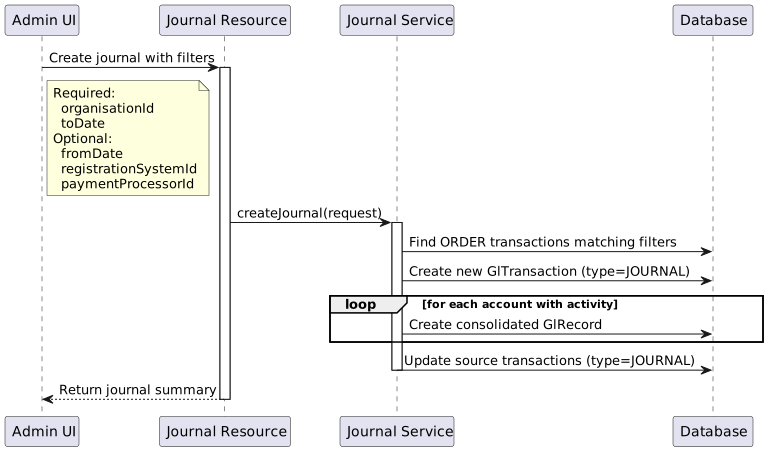
Journal Management - Consolidating GL transactions for export to external accounting systems
2. Problem Statement
2.1. Business Challenges
The Event and Membership System processes registrations that generate financial transactions. Several challenges exist:
| Challenge | Impact |
|---|---|
Payment verification |
Orders may be marked as paid when payment actually failed, or vice versa |
Fee tracking |
Payment processor fees are not captured, making cost analysis incomplete |
Accounting integration |
Financial data must be manually transferred to external accounting software |
Order modifications |
Changes after initial recording create discrepancies in accounting records |
Audit trail |
Difficult to trace the financial history of individual orders |
2.2. Requirements
The financial management system must:
-
Import transaction records from PayFast and PayGate
-
Match transactions to orders for payment verification
-
Calculate and apportion transaction fees across line items
-
Generate GL entries automatically when orders are paid
-
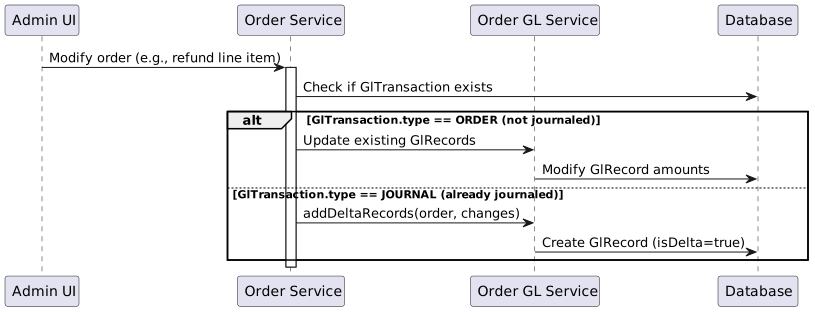
Track delta changes when orders are modified after journaling
-
Consolidate GL transactions into journals for export
-
Support journal reversal to correct errors
-
Maintain clear separation between operational (Order) and financial (GL) records
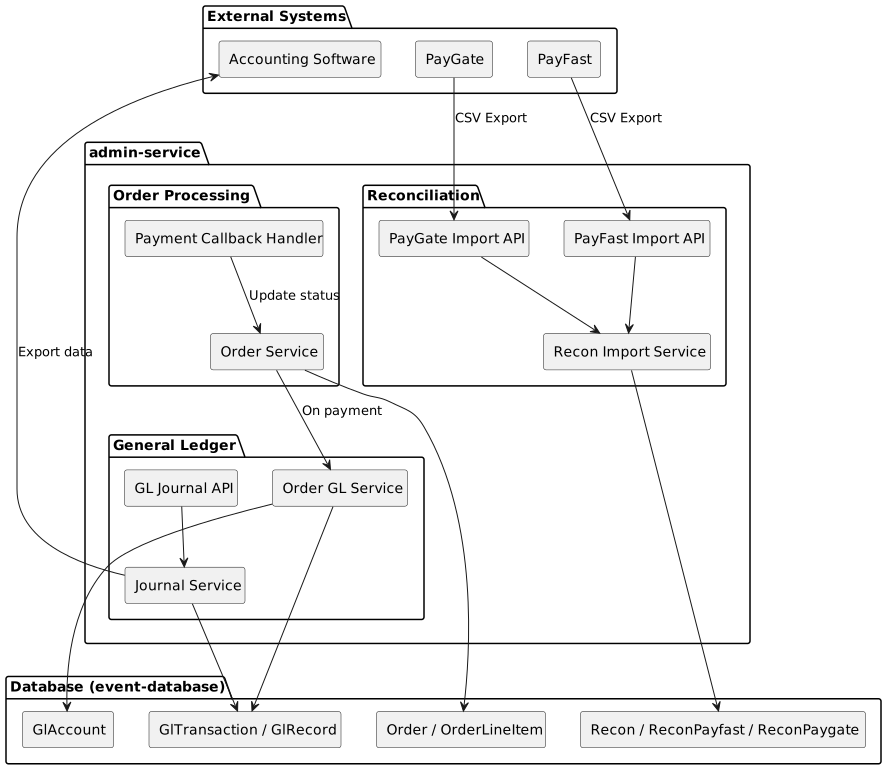
4. Component Architecture
4.1. Reconciliation Subsystem
The reconciliation subsystem imports transaction data from payment processors for verification.
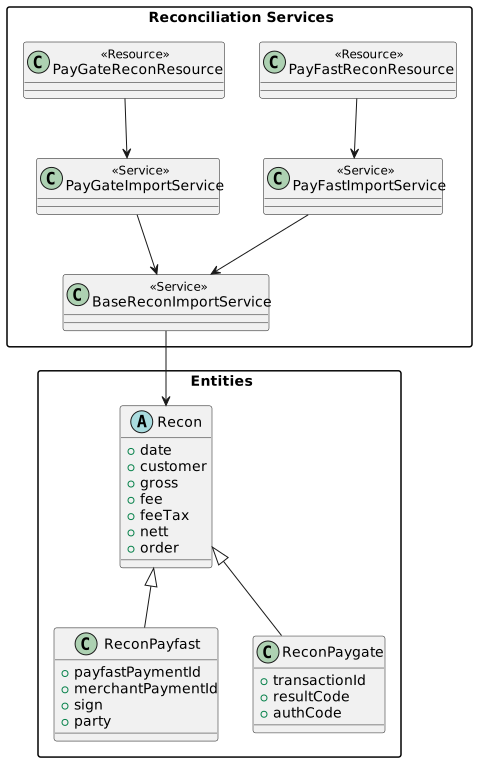
Key Design Decisions:
-
JPA Inheritance (JOINED): Separate tables for processor-specific fields
-
2-char Discriminator: Compact type codes ("PF", "PG") following established enum pattern
-
Direct Import: Fixed CSV schema from payment processors, no column mapping UI required
-
Order Matching: Link recon records to orders via external reference ID
4.2. General Ledger Subsystem
The GL subsystem records the financial effect of orders using double-entry accounting principles.
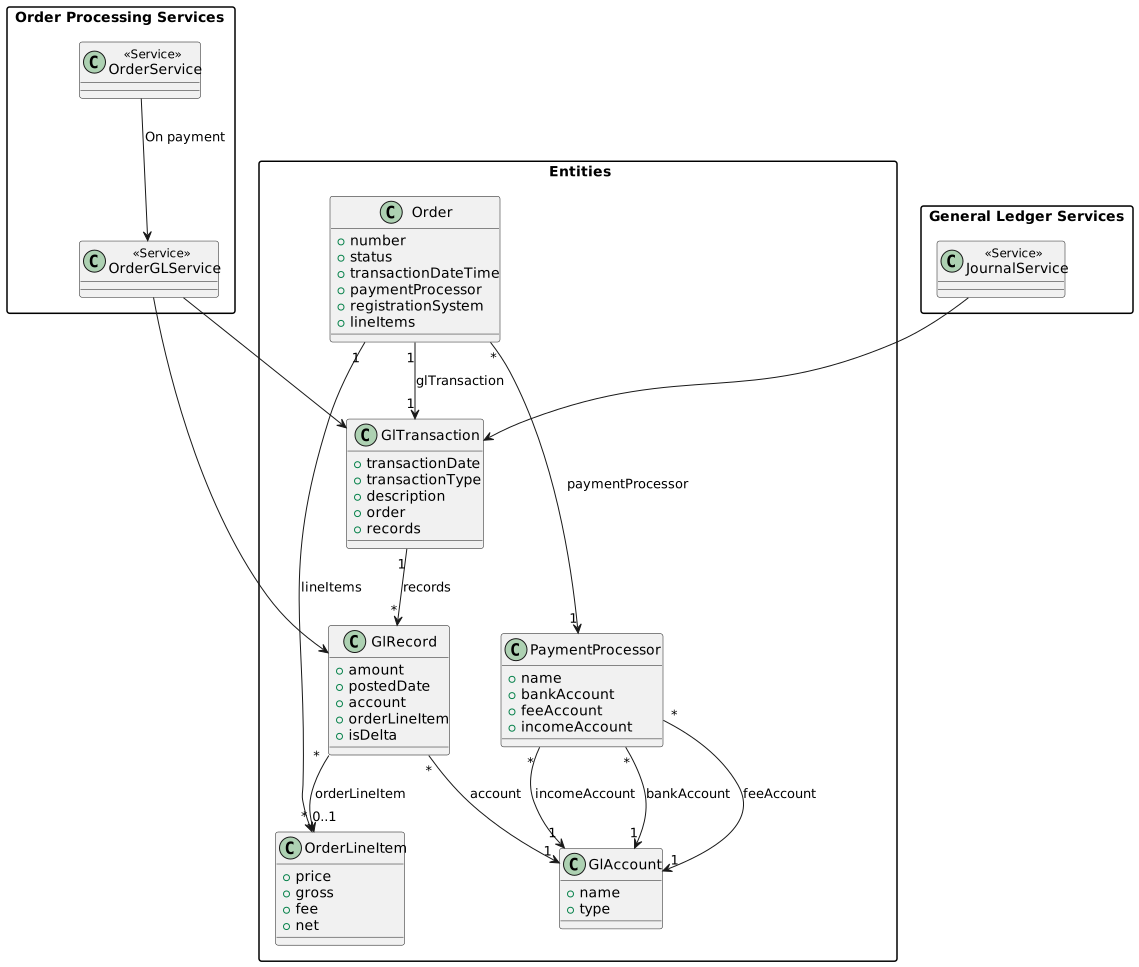
Key Design Decisions:
-
GlTransaction Owns Order: FK on gl_transaction.order_id; Order has mappedBy inverse
-
GlRecord Owns OrderLineItem: FK on gl_record.order_line_item_id for traceability
-
GlTransactionType Enum: ORDER, JOURNAL, ADJUSTMENT, REFUND - no separate journal entity
-
Delta Tracking: is_delta flag on GlRecord indicates post-journal modifications
-
PaymentProcessor Account Mapping: GL accounts derived from Order.paymentProcessor (bankAccount, feeAccount, incomeAccount)
-
Journal Filter Parameters: Journals can be filtered by organisation, transactionDate, registrationSystem, and paymentProcessor
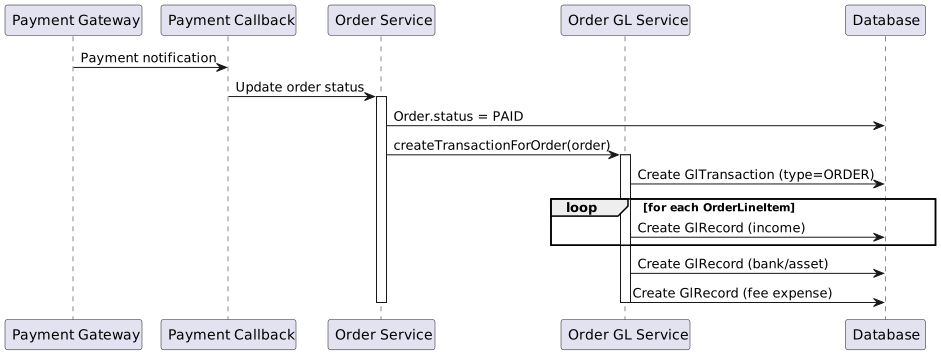
6. Transaction Type State Machine
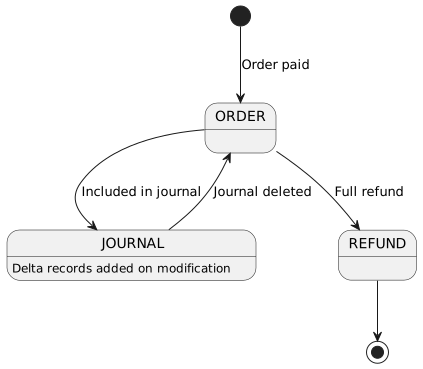
6.1. State Descriptions
| Type | Description | Behavior |
|---|---|---|
ORDER |
Created from order payment |
Can be modified directly; eligible for journaling |
JOURNAL |
Consolidated export entry |
Cannot be modified directly; order changes create delta records |
ADJUSTMENT |
Manual correction |
Stand-alone transaction for adjustments |
REFUND |
Refund transaction |
Created when order is refunded |
7. Account Structure
GL accounts follow a standard chart of accounts pattern:
1000 - Assets
  1100 - PayFast Balance
  1200 - PayGate Balance
  1300 - Bank Account

4000 - Revenue
  4100 - Event Registration Income
  4200 - Membership Fee Income
  4300 - Product Sales Income

5000 - Expenses
  5100 - Payment Processing Fees
  5200 - Refunds Issued
Each organisation maintains its own chart of accounts, enabling multi-tenant operation with independent financial tracking.
7.1. PaymentProcessor Account Mapping
GL accounts are determined by the PaymentProcessor configured on each Order:
| PaymentProcessor Field | Account Type | Usage |
|---|---|---|
bankAccount |
Asset (1xxx) |
Debit for net payment received (consolidated per order) |
feeAccount |
Expense (5xxx) |
Debit for processing fees (per line item) |
incomeAccount |
Revenue (4xxx) |
Credit for gross income (per line item) |
This enables different payment processors to post to different accounts while using the same GL structure.
8. Integration Points
9. Related Documentation
-
Reconciliation Design - Detailed design for recon import
-
General Ledger Design - Detailed GL design
-
Financial Requirements - Business requirements
-
Financial Entities - Entity reference